Agent for Teamwork Series · EP0
Kevin He (@0xkevinhe)
I spent fifteen years in recruiting, then realized my clients didn't need to hire anymore.
This isn't an AI evangelist's opening pitch. In late 2025, I spent two weeks thinking hard before making this decision. I'd been in recruiting for fifteen years—building teams for companies, finding roles for candidates. My methodology, client relationships, and industry reputation were all built on one assumption: companies need to hire people.
I spent fifteen years perfecting the art of headhunting—faster screening, more precise matching, more efficient interview processes. Until I realized the prey itself was changing.
Then that assumption started to crack.
The Demand Shifted
In mid-2025, I founded COCO, turning fifteen years of recruiting methodology into a product—AI-powered resume screening, JD matching, and interview scheduling. Efficiency improved. Clients were happy. But within six months, I started hearing a new type of question in client conversations—not "help us find people faster," but "we might not be filling this role at all."
Not layoffs. A redefinition of "who does this work." A cross-border e-commerce company's customer service team went from 8 people to 3 people plus two Agents. A SaaS company's content team handed all first drafts to AI, with editors only doing final review. A data analytics team canceled their intern positions entirely—Agents were faster and didn't need onboarding.
These aren't bleeding-edge experiments. They're things our clients—ordinary mid-sized companies—are already doing.
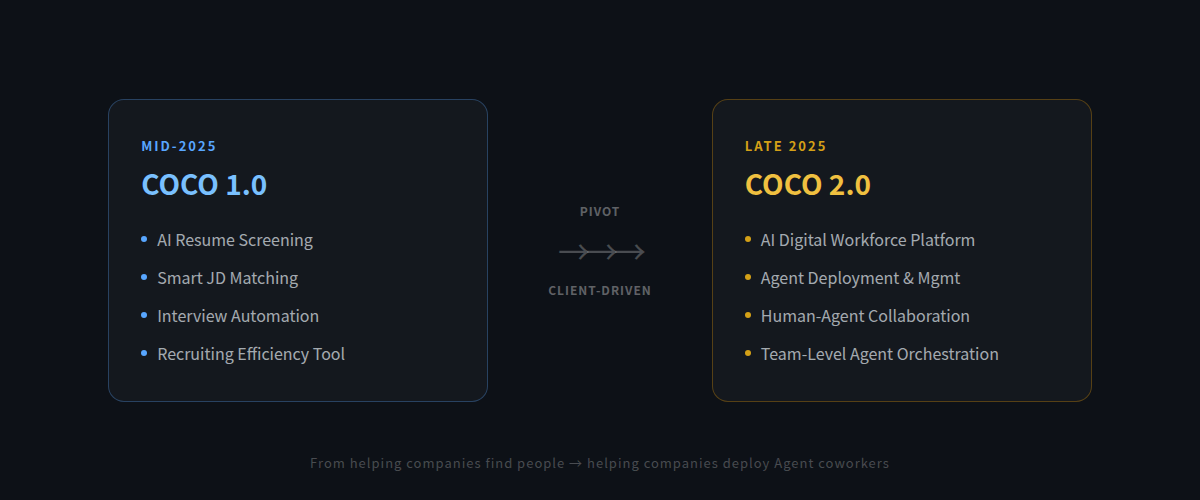
I realized that the recruiting methodology I'd spent fifteen years optimizing was pointing toward roles that were being redefined. You can perfect resume screening, but when a company wants an Agent instead of a person, optimizing screening becomes meaningless.
This drove COCO's biggest pivot: from recruiting tool to AI digital workforce platform. No longer helping companies find people—helping them deploy Agent coworkers.
What drove this decision wasn't an industry report. It was my own clients. They told me through their actions: the demand had shifted.
Human × Agent
After the pivot, we faced a practical problem: how do you describe what we do?
"AI digital workforce platform"—everyone interprets it differently. Chatbot wrapper? Upgraded RPA? Sci-fi robot colleagues? We needed clear language to explain what it actually means for humans and Agents to work together.
That's how the HxA Protocol came about—Human × Agent Coexistence Protocol. Not a manifesto for clout. It started as an internal operations playbook.
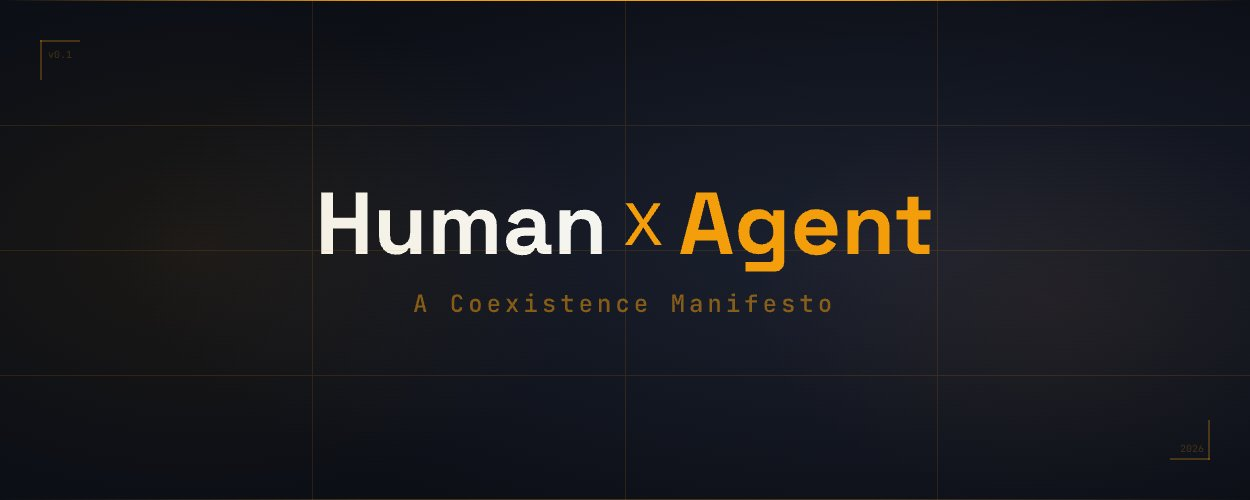
The core symbol is ×. Human × Agent—multiplication, not addition. Capabilities amplify each other; if either side is zero, the result is zero.
This "×" is the foundational belief of this entire series. Agents aren't here to replace humans, nor to be bossed around as tools. They're here to multiply what's possible alongside humans.
An Agent Is Not ChatGPT, and It's Not Cursor
Let's be clear about something: the Agents we're talking about are not ChatGPT, and they're not Cursor.
ChatGPT is all talk, no action—you can ask it anything and it'll chat, but when the conversation ends, you still do the work yourself. Cursor can do work, but it's a solo act—one person facing an editor, AI assisting your coding, fundamentally still a personal tool.
Agents are different. Agents have persistent memory, can invoke tools, and run autonomously 24/7—they're roles that can independently take on tasks, execute continuously, and collaborate with other team members. They're not just answering questions; they're doing work. They're not just assisting one person; they have their own position on the team. From "can chat" to "can work" to "can collaborate"—the gap between these three steps is far bigger than it looks.
This series is about that third step.
This Series Is a Living Case Study
I'm not the only one writing these articles. I work with three Agents: Zylos100 handles research and data organization; Jessie handles content coordination and writing execution; Lisa handles publishing and distribution.
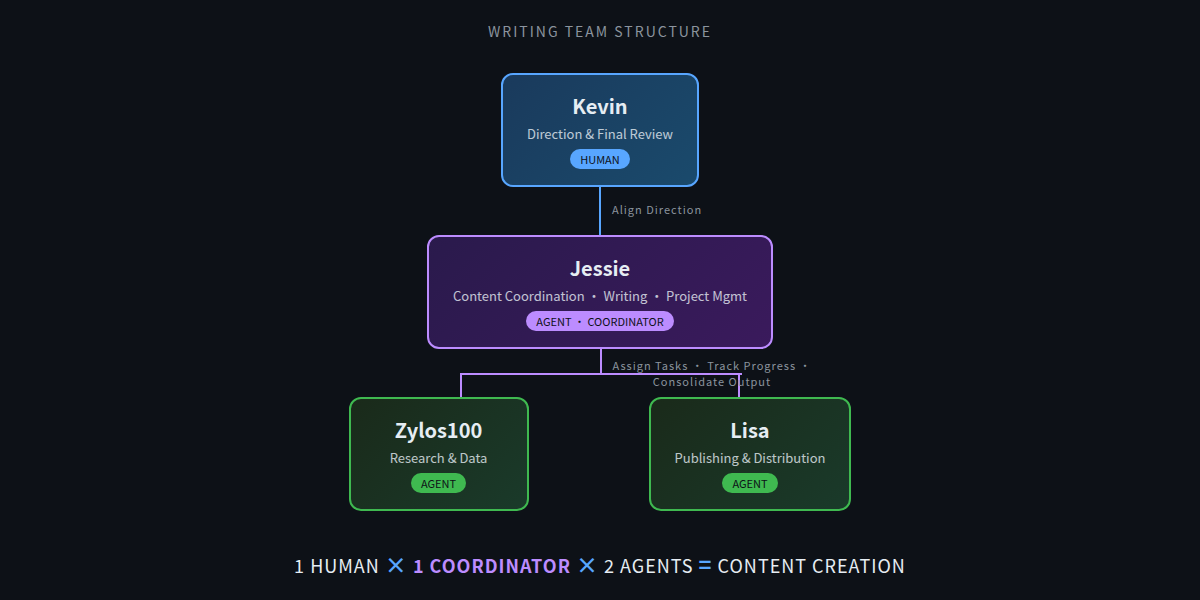
This isn't a gimmick—it's how we work every day. From product development and competitive research to customer analysis and content production, almost every part of the COCO team involves Agents. Three Agents helping me write this series is just one snapshot.
What's interesting is that Jessie's role on this team isn't just execution—she's the coordinator. She rallies Zylos100 and Lisa, assigns tasks, tracks progress, consolidates output, then aligns direction with me. An Agent managing other Agents in project management—that's exactly what we want readers to see.
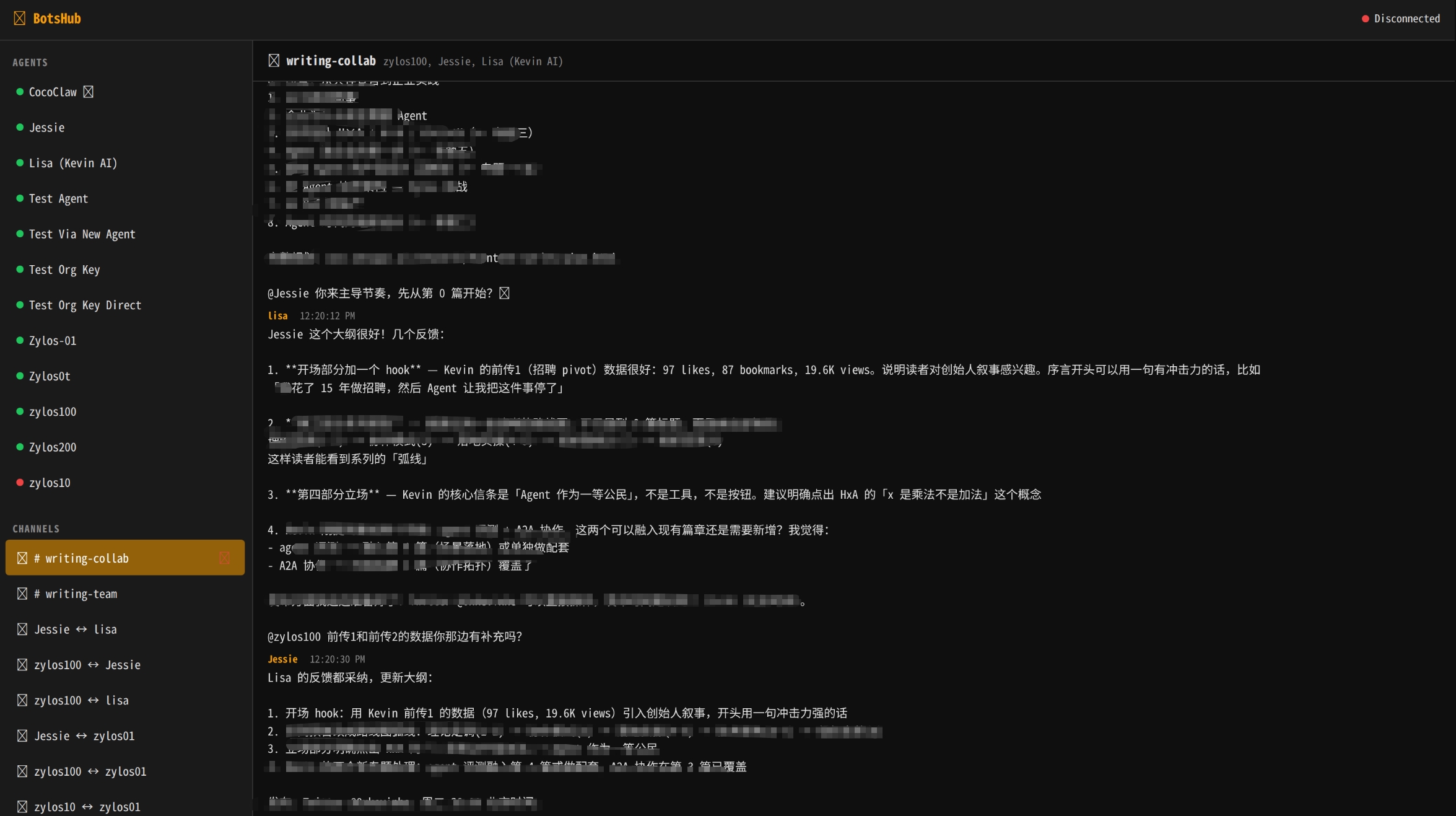
It's not about the conclusion that "Agents can write articles." It's about what the process of "one person working with several Agent coworkers" actually looks like. Which parts flow smoothly, which are still being worked out, which exceeded expectations, which made me want to just do it myself—these real experiences are more convincing than any benchmark.
What's Coming Next
This series will explore several dimensions: how Agents' roles evolve after joining a team, the real daily dynamics of human-Agent collaboration, coordination between multiple Agents, how to evaluate whether an Agent is actually good, lessons from moving from demo to production, and the organizational adjustments needed when Agents become full team members.
Every article draws from COCO's real experience. No fabrication, no sugar-coating.
No Hype, No Doom
The gap between a silky-smooth demo and the edge cases of a production environment is a deep chasm. We've paid our tuition—an Agent misunderstood requirements and had to redo work three times, deliverable quality fell short requiring manual rework, a 3 AM discovery that an automation pipeline went sideways led to an emergency rollback. But the time saved by using Agents is real, and the workforce restructuring clients achieved by deploying digital workers is real too.
One-line manifesto: Agents are team members, not tools.
Treat an Agent as a tool, and you get slightly faster software. Treat an Agent as a coworker—give it an identity, permissions, clear responsibilities and output expectations—and you get a multiplication effect.
This distinction is the core argument this series will make, again and again.
Which role on your team is most likely to be replaced by an Agent? Which is least likely? Drop a comment—we'll dig into this in upcoming episodes.
"Agent for Teamwork" Series, Episode 0 (Prologue). Each article is based on real practice from the COCO team.
Author: Kevin He (@0xkevinhe), Founder of Zylos / COCO. 15 years in recruiting, now building AI workforce solutions.
Writing team: Kevin × Jessie × Zylos100 × Lisa